What Now?

We recently fielded a question from a client who had completed all the required testing for their product and asked a question that I’m sure many of you have also asked: “What now?”.  The answer, in this case, is to apply all the results of testing we have performed to “certification marks” and decide what we want need to apply to the product or product materials.

International marking regulations can be complex and once you move past the big three (United States, Canada, and Europe) it can, in some cases, be extremely tricky.  In this post, I’ll go over some of the more common requirements as well as some specific country cases.

United States and Canadian Safety Listing – in this case, the Nationally Recognized Test Lab (NRTL) that we partner with, is SGS. Their certification mark is used when labeling the product.  This mark is heavily controlled, and approval of the associated mark and label is part of the safety approval process.  The SGS Q-Mark can only be used once you obtain a successful safety listing report.
FCC (United States) – FCC labeling requirements can differ. They can change, depending on the specifications of the product, on whether it contains unapproved wireless transmitters, and/or on whether it contains a pre-approved wireless transmitter(s).  For products that fall under the FCC Supplier’s Declaration of Conformity (SDoC) pathway affixing an FCC label to the product is not a requirement, however, the manufacturer must include a statement in their manual as called out in KDB Publication Number 784748 Appendix A (A.3).  For FCC certification, where filing with the commission occurs and an actual FCC ID is provided for the device in question, that same KDB document details the marking requirements under Section 3, and the FCC logo cannot be applied to the finished product.

ISED (Canada) – Pathways to marking a product in Canada mirror the FCC requirements detailed above. For intentional radiators, information for labeling can be found in Section 4 of RSS-Gen Issue 5.  Labeling requirements for unintentional products or products that would fall under the SDoC procedure for FCC can be found in Section 5.3.2 of ICES-Gen Issue 1.

CE Certification (Europe) – once you have verified that your product meets the requirements of all applicable directives, you will apply the “CE” mark on the product showing compliance.  Here are the requirements as listed on the Europa website, “The CE marking must be visiblelegible, and indelible. The CE marking must consist of the initials “CE”, both letters should have the same vertical dimension and be no smaller than 5mm (unless specified differently in the relevant product requirements).”

CB Scheme (International) – There are no labels associated specifically with the CB scheme IEC testing. You will receive a CB test report and CB certificate as deliverables from a successful test. A CB scheme is “a multilateral certification system based on the IEC International Standards.” More information on the CB scheme can be found on the IECEE website.
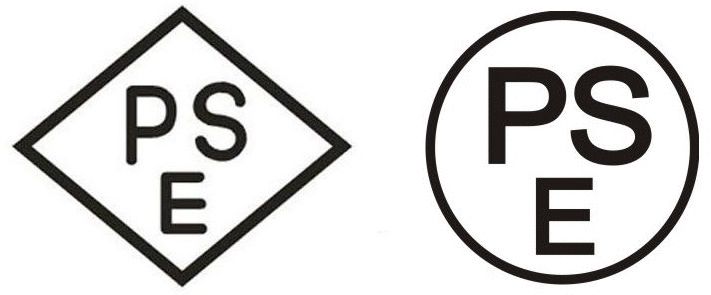
Japan – products may fall into one of two categories. Category A devices are called “specified devices” and are devices that have a history of accidents in the marketplace.  These devices must carry the Diamond PSE mark. Category B devices are called “non-specified electrical products” and are lower-risk products that are subject to a self-declaration scheme like CE.  These products must be marked with the Circle PSE mark. For EMC products that fall into the category of multimedia equipment (MME), compliance with Voluntary Control Council for Interference (VCCI) is mandatory.  Upon completion, use of the VCCI mark is allowed.  Wireless transmitters must obtain MIC certification.  More information on the act, testing, and marking requirements can be found on the Ministry of Economy, Trade, and Industry (METI) website.

South Korea – Upon completion of required testing, clients must affix the KC (Korea Certification) to their product.  The mark confirms that the product meets the relevant Korean Safety and EMC standards.  Korea also has a KS Mark that indicates the product complies with the Korean Industrial Standards (KS).  This mark is granted by a certification body and is mostly voluntary.  More information about these marks and the requirements for South Korea can be found here.

Australia/New Zealand – Successful completion of required EMC and safety testing will allow the client to place the Regulatory Compliance Mark (RCM) on the product.  It signifies compliance with two different schemes:  Electrical Equipment Safety System (EESS) and Australian Communications and Media Authority (ACMA).  Labeling requirements can be found on the EESS website

South Africa – A certification by the Independent Communications Authority of South Africa (ICASA) provides access to the South African marketplace, specifically for manufacturers of wireless technology. Guidelines for how to affix the ICASA label as well as what it should look like can be found on the ICASA website


Mexico – Norma Oficial Mexicana (NOM) certification applies to any number of up to 2,000 product categories.  Once the product is certified to the appropriate NOM safety standard (most of which are based on current IEC standards) and any applicable telecom testing is completed (if the product will connect to the public telecom network) the NOM mark may be applied to the product.  Additional information can be found on the Mexican Government’s Website.
F2 Labs can assist your company with worldwide approvals no matter which economy you wish to enter.

We can be contacted via this link or by phone at (877) 405 – 1580.

F2 Labs is here to help.
Posted in ATEX Directive 2014/34/EU, CE marking, EMC Directive 2014/30/EU, FCC, FDA, Field Label, GPSR, GPSR (EU)2023/988, International Testing, Low Voltage Directive 2014/35/EU, Machinery Directive 2006/42/EC, Machinery Regulation (EU)2023/1230, Medical Devices Regulation (EU)2017/745, PPE Regulation (EU) 2016/425, Pressure Equipment Directive 2014/68/EU, Prop 65, Radio Equipment Directive 2014/53/EU, REACH, RoHS Directive 2011/65/EU, SPE-1000, UKCA, US Field Label | Comments Off on What Now?

Compliance for Electric Bicycles, E-Bikes, and the EU

This article focuses on the applicability of the Machinery Directive 2006/42/EC and E-Bikes. Since other requirements also apply, they are touched as well below.

We are contacted from time to time by bicycle manufacturers regarding EU and CE requirements for electric bicycles, aka “E-bikes.”. I frequently road-cycle for exercise, and I have looked at E-bikes in my local bike shop for the past year or 18 months. Further, I have seen people riding these and yeah, they look like fun.
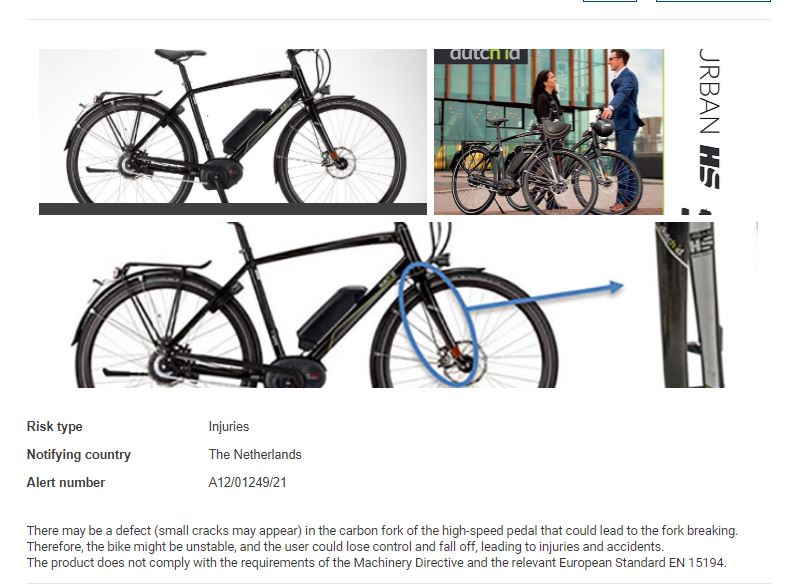
So, I read, with great interest, that an E-bike was flagged in the EU and the manufacturer was forced to recall them. Imagine the expense of that? Check the alert from the EU’s safety gate, here.

Below is a screenshot of the notification, including the safety issues.

These bicycles are in the scope of the following Directives:

As a quick aside, I want to dedicate just a few words about E-bikes and the RoHS Directive 2011/65/EU + (EU)2015/863. RoHS applies to any product with any electric function, no matter how minor. For example, a lawnmower with a pull-start has just a small electric function but it is in scope. However, there are a few exclusions. See RoHS 2011/65/EU, Article 2, 4. (exclusions), (f):

(f) means of transport for persons or goods, excluding electric two-wheel vehicles which are not type-approved;

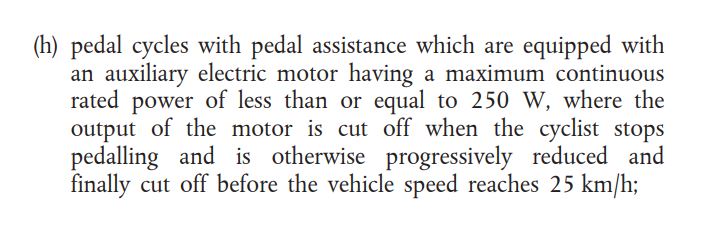
Article 2, (4.), (f) refers to Regulation (EU) No 168/2013, Article 2., 2. (exclusions), (h):

(h) pedal cycles with pedal assistance which are equipped with an auxiliary electric motor having a maximum continuous rated power of less than or equal to 250 W, where the output of the motor is cut off when the cyclist stops pedalling and is otherwise progressively reduced and finally cut off before the vehicle speed reached 25 km/h;

Since E-bikes are excluded from (EU)168/2013 they cannot be considered as “type-approved” in that regulation. Therefore, they are in the scope of the RoHS Directive and its substance level restrictions. Marking an E-bike with a CE marking is a claim of compliance to the RoHS Directive, intended or not.

Back to the discussion pertaining to E-bikes and the Machinery Directive –

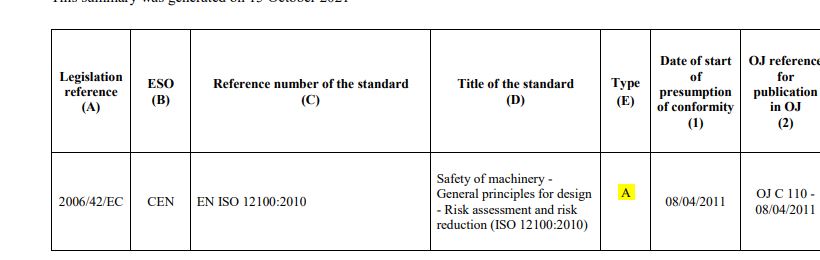
Notice that a specific standard, EN 15194, is referenced. That standard is a C-type Machinery Directive standard. What does that mean? There are three types of Machinery Directive standards –

A-type – applicable to all machinery. EN 12100:2010 is the MD’s risk assessment standard and is an example.

B-type – applicable to broad categories of machinery. The main electrical safety standard, EN 60204-1 is an example.

C-type – for a very specific type of machine with unique risks. EN 15194 is an example.

The important thing to understand is that if a C-type standard is applicable to your machinery then that standard (or standards) must be applied to claim compliance to the Machinery Directive. Remember, harmonized standards are voluntary, but they offer the best route to compliance. This is because if you determine the risks from the machinery (Annex I) and then apply harmonized standards to those risks (eliminate/reduce/warn) the resulting EU declaration of conformity will reference the standards used. Equipment that complies with EU Directives by application of harmonized standards benefits from the status of “presumption of conformity.”

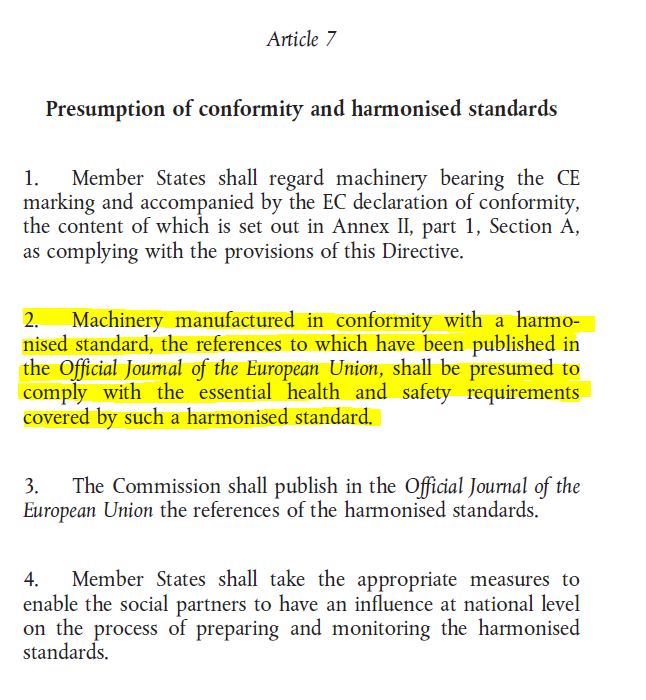
See Article 7, and particularly point 2., from the Machinery Directive 2006/42/EC.

Article 7   Presumption of conformity and harmonized standards  1. Member States shall regard machinery bearing the CE marking and accompanied by the EC declaration of conformity, the content of which is set out in Annex II, part 1, Section A, as complying with the provisions of this Directive.  2. Machinery manufactured in conformity with a harmonized standard, the references to which have been pyblished in the Official Journal of European Union, Shall be presumed to comply with the essential health and safety requirements covered by such a harmonized standard. 3. The Commission shall publish in the Official Journal of the European Union the references of the harmonized standards. 4. Member States shall take the appropriate measures to enable the social partners to have an influence at national level on the process of preparing and monitoring the harmonized standards.

The list of standards is published in the Official Journal of the EU and updated periodically at this LINK.

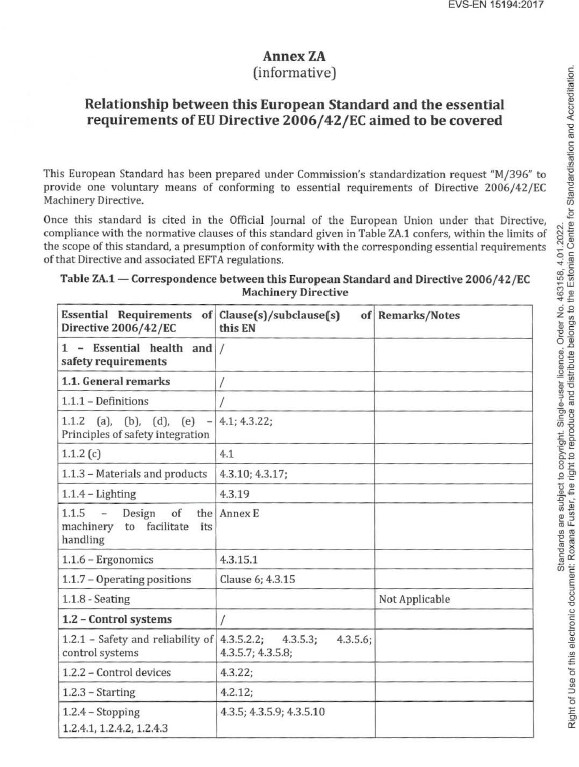
We own a copy of this standard, so I opened it up to look. See the first page (of five) from Annex ZA from EN 15194 below.

Notice that there are several identified Machinery Directive Annex I requirements. I wrote about the relationship between the Annex I requirements and the standards, here: LINK. That article is over two years old but is just as relevant today.

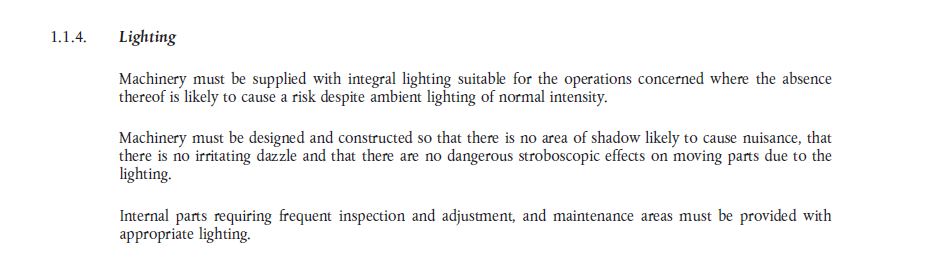
Understanding the table above requires an understanding of the relationship between the harmonized standard (in this case EN 15194) and Annex I of the Machinery Directive. Notice in the table above that (on the left) Annex I EHSR (essential health and safety requirement) 1.1.4 Lighting is referenced. 1.1.4 Lighting is copied from the Machinery Directive and pasted below –

1.1.4. Lighting – Machinery must be supplied with integral lighting suitable for the operaions concerned where the absence thereof is likely to cause a risk despite ambient lighting of normal intensity.  Machinery must be designed and constructed so that there is no area of shadow likely to cause nuisance, that there is no irritating dazzle and that there are no dangerous stroboscopic effects on moving parts due to the lighting. Internal parts requiring frequent inspection and adjustment, and maintenance areas mist be provided with appropriate lighting.

Next, we see that clause 4.3.19 from EN 15194 is listed next to Annex I, 1.1.4 Lighting in the above table from Annex ZA. The table is indicating that if Annex I, 1.1.4 Lighting is applicable (which would be determined during a risk assessment) then the technical requirement for compliance is indicated in clause 4.3.19 of EN 15194.

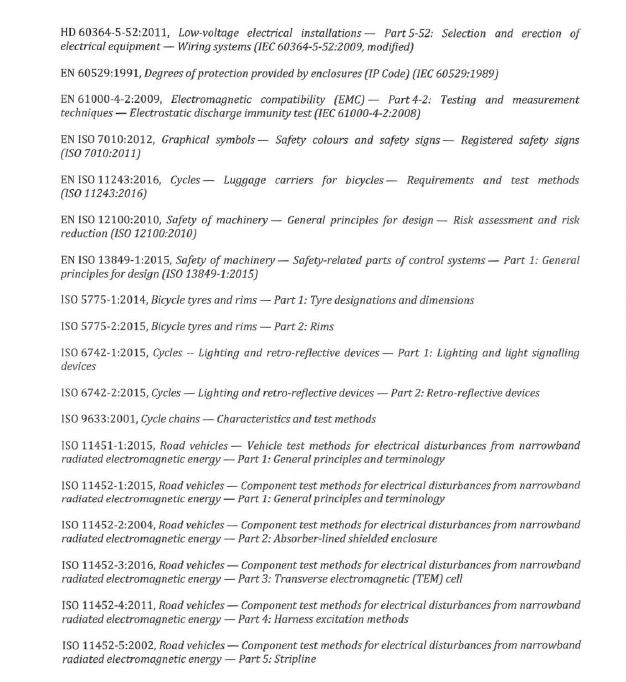
Clause 4.3.19 sends us to a few ISO standards to address the requirements:

  • ISO 6742-1 – Cycles – Lighting and retro-reflective devices – Part 1: Lighting and light signaling devices
  • ISO 6742-2 – Cycles – Lighting and retro-reflective devices – Part 2: Retro-reflective devices

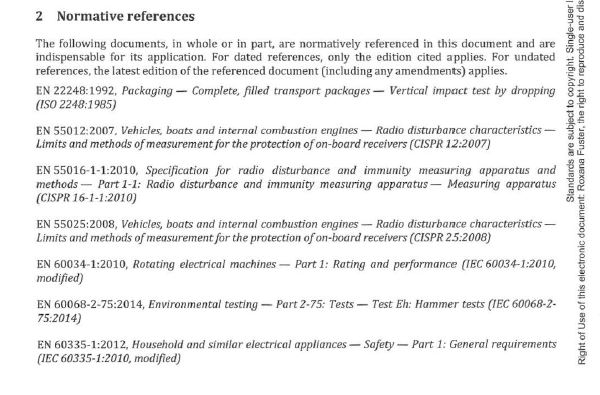
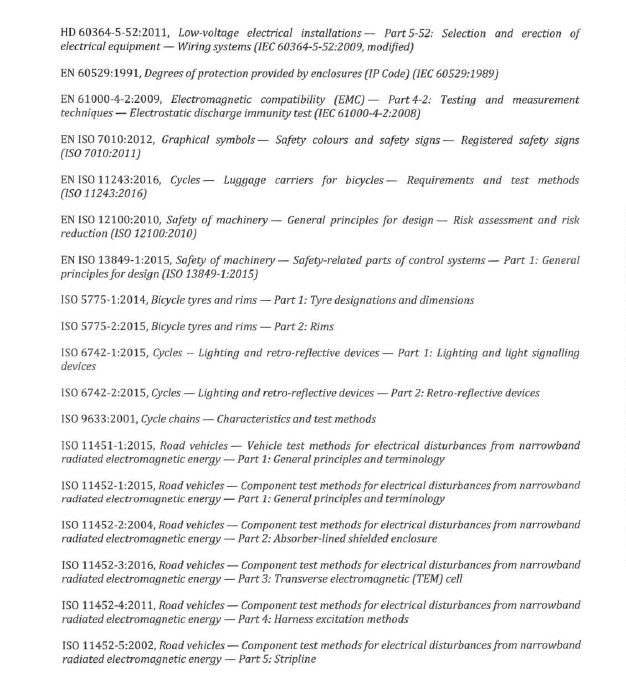
Next, see clause 2 from EN 15194 below. This is the list of additional standards that are attached to the clauses in the table in Annex ZA. In other words, depending upon the outcome of the EN ISO 12100:2010 risk assessment, part of or some of any of these standards may apply.

I looked through EN 15194 extensively this morning. It is filled with requirements that appear to be difficult and complex. For example, braking requirements are littered throughout the standard. It would be very risky to claim compliance to the requirements of this standard without outside technical intervention from an accredited test laboratory. Further, consider what would happen if a person was injured because of poor braking performance? Without a test report or set of test reports from an accredited test lab addressing these and all risks, the consequences could be severe.

Would you know where to start to test the strength of the forks on your E-bike? How about how much distance is required for braking? Or, what about the visibility of the paint or reflectors? All the requirements are in that standard.

Want some help to understand the requirements of CE marking and your EU project? F2 Labs helps manufacturers across the globe every day with small and large products. We have experts who quickly determine what is applicable to the equipment, legally and technically.

We can be contacted via this link. We can be reached by phone at 877-405-1580 and are here to help you.

F2 Labs is here to help.

Posted in CE marking, Machinery Directive 2006/42/EC, RoHS Directive 2011/65/EU | Comments Off on Compliance for Electric Bicycles, E-Bikes, and the EU

What is a CE marking? Does My Product Need One?

The CE mark is a mandatory European marking for certain product groups to indicate conformity with the essential requirements set out in European Directives. To use the CE mark on a product, the manufacturer must draw up an EU Declaration of Conformity (DoC) in which the manufacturer attests to conformity with all relevant New Approach Directives (NADs) and takes sole legal responsibility, also called self-certification. In some instances, a NAD may require a Notified Body to issue a Certificate of EU Declaration of Conformity (DoC) to verify the performance of the product or the constancy of the production process (Factory Production Control, for example).

There are numerous directives that products placed on the market in Europe must comply with, however, manufacturers of electronic products have a small list of Directives that are typical, depending on product type.

Radio Equipment Directive 2014/53/EU (RED) – any product that contains a radio module or utilizes wireless technology will more than likely fall into this directive for compliance. “Radio equipment”, as defined in the new RED specifies: ‘radio equipment’ means an electrical or electronic product, which intentionally emits and/or receives radio waves for the purpose of radio communication and/or radiodetermination, or an electrical or electronic product which must be completed with an accessory, such as antenna, so as to intentionally emit and/or receive radio waves for the purpose of radio communication and/or radiodetermination

EMC Directive 2014/30/EU  – the EMC Directive deals with ensuring that equipment functions satisfactorily in its electromagnetic environment without introducing unacceptable electromagnetic disturbances to other equipment in that environment. And it must be impervious to EMC from the environment and other equipment operating in the vicinity. The EMC Directive ensures the correct operation of equipment, that it adequately responds to electromagnetic phenomena, and the avoidance of any interference effects.

Low Voltage Directive 2014/35/EU – electrical products that have a voltage rating within the below parameters can be subject to the LVD:

  • 50-1000 volts for AC devices
  • 75-1500 volts for DC devices

Conformity to the LVD is mandatory if your product is within the voltage limits and not excluded by the law. LVD compliance is not assured by using all CE-marked components. That is the starting point and the device itself must carry a CE marking that indicates the overall assembly, tested and evaluated as a single unit, is in legal compliance with the Low Voltage Directive. 

Machinery Directive 2006/42/EC – equipment that may fall into the Machinery Directive includes, besides machinery, the following:

  • Interchangeable equipment
  • Safety components
  • Lifting accessories, chains, ropes, and webbing
  • Removable mechanical transmission devices
  • Partly completed machinery

Machinery is defined, broadly, as anything with linked components that move under other-than-human power. Think Electrical, Hydraulic, and or Pneumatic function.

The Machinery Directive is a law and requires that equipment within its scope is compliant with the applicable technical requirements listed in Annex I. These technical requirements are called the Essential Health and Safety Requirements (EHSR’s).

RoHS Directive 2011/65/EU – The Restriction of Hazardous Substances (RoHS) Directive is a CE marking Directive that applies to anything that is “EEE” or ‘electrical and electronic equipment’, essentially anything that has an electric function, even a gas powered lawn mower with a piezo spark ignitor. Products that fall under the scope of RoHS are found in Annex I of the RoHS Directive and the material restrictions that manufacturers must comply with are listed in Annex II.  If your product is in the scope of the RoHS Directive, every individual component of your product (paint, screws, housings, labels, etc) must be independently compliant to the substance level restrictions in the RoHS Directive. 

Please contact F2 Labs if you have any questions regarding your product’s need for CE compliance.

Posted in ATEX Directive 2014/34/EU, CE marking, EMC Directive 2014/30/EU, EMC Testing, GPSR, GPSR (EU)2023/988, Lasers, Low Voltage Directive 2014/35/EU, Machinery Directive 2006/42/EC, Machinery Regulation (EU)2023/1230, Medical Devices Regulation (EU)2017/745, Pressure Equipment Directive 2014/68/EU, Product Testing, Radio Equipment Directive 2014/53/EU, RoHS Directive 2011/65/EU | Comments Off on What is a CE marking? Does My Product Need One?

Harmonizing UL 60335-2-40/CSA C22.2 No. 60335-2-40 with EN 60335-2-40

For years, more niche product categories have suffered from not having harmonized testing standards.  What this means for manufacturers is more expensive and extensive regulatory exercises because the standards for the US, Canada, and the European Union are all different. 

Now, when new standards are created or adopted, an effort is being made to move towards this harmonization process.  Recently, UL 60335-2-40/CSA C22.2 No. 60335-2-40 were adopted and are harmonized with EN 60335-2-40 and IEC 60335-2-40.  This UL & CSA certification testing standard applies to multiple products including packaged air conditioners and heat pumps, as well as liquid chillers, dehumidifiers, room air conditioners, and others.  This new standard will eventually replace several standards that are used in the HVAC industry, the biggest of which is UL 1995, but will also replace UL 484 and UL 474. 

The new standard includes the type testing for each of the tests outlined in UL 1995, however, there are now more extensive requirements and unique tests that are different from what has been done in the past.  These include but are not limited to Electronic Fault Test, Glow Wire Test, Flammability Requirements, and additional assessment for power input and current, heating, abnormal temps, ball pressure, amongst others.

The new standard doesn’t go “live” until 2024, and manufacturers may continue to utilize UL 1995 and other appropriate standards for new and existing products but should begin looking at what 60335-2-40 will require of them from a testing standpoint.  Manufacturers may begin utilizing 60335-2-40, if they so desire, to get a “head-start” on the competition.  However, understand that during this transition period additional changes may be made to the standard as it continues to evolve.  Products currently listed to UL 1995, UL 484, UL 474, or similar standards, will more than likely need to undergo full retesting, as UL 60335-2-40 has different test-based requirements as well as new component requirements. 

When utilizing the new standard, especially during the transition period, it’s important to have a trusted partner who can help walk you through and effectively guide your team through this process.  Reach out to F2 Labs today for Product Safety Testing Services and let us know how we can assist your team in navigating the compliance maze and get your product to market!

Posted in Listing, Product Testing, UL 60335-1 | Tagged , , , | Comments Off on Harmonizing UL 60335-2-40/CSA C22.2 No. 60335-2-40 with EN 60335-2-40

FCC Part 15 Requirements for Bluetooth and Wi-Fi Modules/Devices

Bluetooth and Wi-Fi are technologies that allow our devices to be interconnected, whether that be wireless earbuds, cellular phones, hands-free sets for our cars, tablets, computers, etc.  In the United States, products that contain Bluetooth and/or Wi-Fi modules have two pathways towards FCC approval, and manufacturers are legally required to comply with one of these pathways, the details of which are found in CFR 47/Chapter 1/Subchapter A/Part 2/Subpart J.  

FCC Certification

The first (2.907 – Subpart J) is what is known as product certification where a finished product, Bluetooth module or Wi-Fi module, etc. may contain an unlicensed or uncertified module, or be, unlicensed or uncertified.  In this scenario, we would test the product, Bluetooth module, or Wi-Fi module to FCC Part 15 Subpart C subpart 15.247 or FCC Subpart C subpart 15.249 and produce test results.  These test reports would then go through what is called the TCB Review Process (Telecommunication Certification Body) where the reports and product details are reviewed and certification is granted (assuming a passing review), allowing the manufacturer to place an FCC ID on the finished product or Bluetooth module.  This ID must be visible on the product whether it is a label, etched on the exterior of the product, or electronically displayed.  See more on the FCC rules for labeling here.  For more information on Modular approval, requirements click here.

FCC Supplier’s Declaration of Conformity

The second (2.906 – Subpart J) is what is known as a Supplier’s Declaration of Conformity.  In this scenario, a product may contain a pre-certified Bluetooth module, or Wi-Fi module, etc. that has been integrated into the host device without making any modifications to the module grant conditions (such as antenna type, gain, power, etc.).  Under those conditions, a manufacturer would test for Radiated and/or Conducted Emissions (depending on how the product is powered) under FCC Part 15 Subpart B, 15.107 and/or 15.109 to ensure that the product complies.  With a test report in hand and a Supplier’s Declaration of Conformity, the manufacturer is not required to file with the FCC.  In this case, the manufacturer would need to place a label on the outside of the product that says it contains the FCC ID of the pre-certified wireless transmitter (i.e., Bluetooth or Wi-Fi module). 

F2 Labs is an expert in navigating this sometimes complicated, and confusing process.  It only looks confusing… we do this every day. Reach out to us today, so we can assist you in navigating the compliance maze and getting your product to the market as quickly, correctly, and as efficiently as possible.

Posted in EMC Testing, FCC, Product Testing | Comments Off on FCC Part 15 Requirements for Bluetooth and Wi-Fi Modules/Devices

Great Britain Changed the UKCA Deadline for Implementation, Again

The COVID-19 pandemic has thrown us all for a loop. Effects of the pandemic have been seen across many industries, supply chains, and more, including the extension of deadlines for product compliance regulations.

In a statement on August 24th, 2021, the UK government announced that due to the COVID-19 pandemic, the deadline for products transitioning from CE compliance to UKCA compliance has been extended.  The new deadline is now January 1st, 2023.

Manufacturers looking for more advice and guidance can also reference the resources provided on the UK Government website.   

Refresher on UKCA:

The UK has left the EU and new rules concerning the transition for most CE products to UKCA products began in January 2021. The transition period for most products ends on December 31st, 2022 (previously December 2021).  All products shipped into the UK after that date must have the UKCA mark and a UKCA Declaration of Conformity.

All medical devices placed on the Great Britain market must now be registered with the MHRA.

The technical requirements and conformity assessment process and standards that demonstrate conformity for both the UKCA and CE markings are largely the same.

The UK has administered separate guidance for medical devicesrail interoperabilityconstruction products, and civil explosives.

UKCA Transition Period

The UKCA marking came into effect on January 1st, 2021, but an adjustment period will be in place until January 1st, 2023.  During that timeframe, the UK will still accept the CE mark in most cases.  F2 Labs recommends that you contact us as soon as possible to ensure your product will meet the deadline for this transition.

Products covered by the UKCA marking

  • Toy safety
  • Recreational craft and personal watercraft
  • Simple pressure vessels
  • Electromagnetic compatibility
  • Non-automatic weighing instruments
  • Measuring instruments
  • Lifts
  • ATEX
  • Radio equipment
  • Pressure equipment
  • Personal protective equipment
  • Gas appliances
  • Machinery
  • Equipment for use outdoors
  • Ecodesign
  • Aerosols
  • Low voltage electrical equipment
  • Restriction of hazardous substances
  • medical devices*
  • rail interoperability*
  • construction products*
  • civil explosives*

* are covered by UKCA marking but have special rules.

F2 Labs is here to help. Reach one of our experts by phone at 877-405-1580 or schedule a meeting here.

Posted in ATEX Directive 2014/34/EU, CE marking, EMC Directive 2014/30/EU, EN 60601-1, General Product Safety Regulation (EU) 2023/988, GPSR, GPSR (EU)2023/988, Low Voltage Directive 2014/35/EU, Machinery Directive 2006/42/EC, Machinery Regulation (EU)2023/1230, Medical Devices Regulation (EU)2017/745, Pressure Equipment Directive 2014/68/EU, Product Testing, Radio Equipment Directive 2014/53/EU, REACH, RoHS Directive 2011/65/EU | Tagged | Comments Off on Great Britain Changed the UKCA Deadline for Implementation, Again

F2 Labs’ is Officially Approved as an FDA ASCA-Accredited Testing Lab!

We are excited to announce that F2 Labs is officially an ASCA-accredited testing laboratory! We are one of only 17 labs approved by the FDA for this groundbreaking certification.

As an ASCA-accredited laboratory, we are certified to perform testing in accordance with the specifications of ISO/IEC 17025 and ASCA program specifications. This program will help increase product safety for the end-user and shorten the time it takes for FDA approval of your product.

What is ASCA?

The FDA launched ASCA to support its public health mission by increasing confidence in test results provided by testing laboratories. Becoming accredited comes with standards a laboratory must follow beyond the initial application process, including periodic audits. This helps ensure confidence with the FDA that we follow the proper procedures and help get your product through the FDA 510K process quicker.

The ASCA program will NOT introduce new requirements for medical device manufacturers. Instead, the ASCA intends to promote consistency and predictability in all of the FDA’s premarket submission programs.

When a lab is ASCA accredited, medical device manufacturers can be more confident that the lab conducting testing (within the laboratory’s scope of ASCA Accreditation) is likely to meet FDA’s regulatory requirements. Your products are no longer likely to be excluded from FDA approval because of an issue related to the lab’s testing if you use an ASCA Accredited lab in good standing.

The FDA believes the experience gained in the ASCA Pilot could broadly inform international harmonization efforts such as standards use across jurisdictions. ASCA is designed to increase manufacturer and consumer confidence in medical device testing, which will help ensure the widespread accessibility of safe and effective medical devices.

F2 Labs can provide more detail about the ASCA program as it relates to your product. You can also find more information and helpful resources at F2Labs.com. The ASCA program and F2 Labs’ accreditation through it, helps us fulfill our mission of partnering with our clients to make the world a safer place.

Please feel free to contact us if you have any questions.

Posted in ASCA Program | Tagged , , , , | Comments Off on F2 Labs’ is Officially Approved as an FDA ASCA-Accredited Testing Lab!

The FDA’s ASCA Program and What it Means

Big news in the product compliance world is the FDA’s new ASCA program. The FDA has launched ASCA with the intention to support its public health mission by increasing confidence in test results provided by testing laboratories. Testing laboratories apply to become ASCA-accredited. This is the first time in history that the FDA has had a list of approved labs. Becoming accredited comes with standards a laboratory must follow past the initial application process, including periodic audits that can result in suspension or withdraw of accreditation.  

The FDA hopes this program will help enhance confidence in medical device testing lab, promote consistency and predictability in the premarket review process, encourage effective use of FDA resources, and support international harmonization. The increased confidence in testing may be particularly helpful for premarket submissions that rely on Declarations of Conformity to FDA-recognized consensus standards using test results from ASCA-accredited testing laboratories.

ASCA does not introduce new requirements for medical device manufacturers. Rather, by clearly communicating expectations for how results from ASCA-accredited testing laboratories are included and reviewed in premarket submissions, the ASCA intends to promote consistency and predictability in all of the FDA’s premarket submission programs.

By virtue of a testing laboratory’s ASCA Accreditation, device manufacturers can be more confident early in the product development lifecycle that testing to the FDA recognized consensus standards and test methods within the laboratory’s scope of ASCA Accreditation is likely to meet FDA’s regulatory requirements.

FDA used elements from international conformity assessment standards in the ISO/IEC 17000 series to establish the ASCA Pilot. The standards within the ISO/IEC 17000 series are used worldwide by stakeholders including accreditation bodies, testing laboratories, and device manufacturers. In addition, most of the FDA-recognized consensus standards and test methods selected for the ASCA Pilot are international consensus standards. FDA believes the experience gained in the ASCA Pilot could broadly inform international harmonization efforts such as standards use across jurisdictions.

ASCA is designed to increase confidence in medical device testing (by both manufacturers and consumers), which in turn will help to ensure the widespread accessibility of safe and effective medical devices.

F2 Labs is officially an ASCA-accredited testing laboratory that performs testing in accordance with the specifications of ISO/IEC 17025 and FDA ASCA program specifications. We believe this program will help not only increase product safety for the end-user but also shorten the time it takes for FDA approval of your product. Let F2 Labs provide you with the testing you need to get through the FDA approval process.

For more info from the FDA about the ASCA program, click here.

To schedule testing for your product contact us or call 877-405-1580.

Posted in ASCA Program, FCC, FDA | Tagged , , , | Comments Off on The FDA’s ASCA Program and What it Means

What is the UKCA Marking?

The UK has left the EU and new rules concerning the transition for most CE products to UKCA products began in January 2021. The transition period for most products ends on December 31, 2021.  All products shipped into the UK after that date must have the UKCA mark and a UKCA Declaration of Conformity.

About the UKCA Mark

The UKCA (UK Conformity Assessed) marking is the new UK product marking used for goods that hope to be placed on the market in Great Britain. In most cases, these goods previously required CE marking.

F2 Labs recommends that you contact us as soon as possible to ensure your product will meet the deadline for this transition.

Even though the technical requirements and conformity assessment process and standards that demonstrate conformity for both the UKCA and CE markings are largely the same, the UKCA mark testing is not recognized in the EU market and the CE mark will not be recognized in the UK market (at the end of the 2021 transition period).

If your product is not already CE Marked, testing would need to be conducted so that the CE and/or UKCA mark can be applied to the product.

Manufacturers can supply a UKCA Declaration of Conformity beginning on January 1st, 2021. However, it will not be mandatory until the end of the implementation period, which is December 31st, 2021 (with some exceptions).

Product Labeling, Technical Documentation, and Declaration of Conformity with UKCA

Product labeling is required for UKCA products in the UK market. In most cases, you must apply the UKCA marking on the product itself or the packaging. Starting in January 2023 the label must be permanently attached unless otherwise specified in legislation.

Technical documentation that demonstrates your product’s conformity with regulatory requirements must be kept for up to 10 years after the product is placed on the market. Product documentation can be requested at any time by market surveillance or enforcement authorities, for the safety of the public. The information requested will vary depending on specific legislation pertaining to your product.

A Declaration of Conformity must be supplied to the end-user for most products with a UKCA mark. The declaration of conformity declares key information about the product, including your name and full business address and the product’s serial number, model, or type identification, etc.

Similar to the technical documentation, the declaration of conformity should be available to market surveillance authorities on request.

For more detailed information, check out our main UKCA page or contact one of our representatives.

Products covered by the UKCA Marking

  • Toy safety
  • Recreational craft and personal watercraft
  • Simple pressure vessels
  • Electromagnetic compatibility
  • Non-automatic weighing instruments
  • Measuring instruments
  • Lifts
  • ATEX
  • Radio equipment
  • Pressure equipment
  • Personal protective equipment
  • Gas appliances
  • Machinery
  • Equipment for use outdoors
  • Ecodesign
  • Aerosols
  • Low voltage electrical equipment
  • Restriction of hazardous substances
  • medical devices*
  • rail interoperability*
  • construction products*
  • civil explosives*

*covered by UKCA marking but have special rules.

Posted in UKCA | Tagged , , , , | Comments Off on What is the UKCA Marking?

Great Britain’s UKCA mark – September 2020 Update

We published an article about Brexit and its implications for CE marking back in February of this year. A link to that article is here. The UK government posted new guidance about this on September 1, 2020. The link to that information is here.

You do not need to go to those links and sift through the information. We have summarized the main points below.

  • CE marking will apply to most products until January 1, 2022. These product area categories are:
    • Toys
    • Recreational and personal watercraft
    • Simple Pressure Vessels
    • EMC
    • Non-automatic Weighing Instruments
    • Measuring Instruments
    • Lifts
    • Radio Equipment
    • Pressure Equipment
    • Personal Protective Equipment
    • Gas Appliances
    • Machinery
    • Outdoor Noise
    • Ecodesign
    • Aerosols
  • CE marking will apply to medical devices until June 30, 2023.
    • Note that beginning January 1, 2021 all medical devices and in vitro diagnostic medical devices imported into the UK must be registered with the Medicines & Healthcare Products Regulatory Agency.
    • There is a 4-month grace period for Class IIIs, Class IIb implantable products, and active implantable medical devices
    • There is an 8-month grace period for registering for Class IIb and Class IIa devices.
    • All manufacturers based outside the UK will need to establish a UK Responsible Person.
    • There is a 12-month grace period for Class I devices.
    • You can start using the UKCA mark (if your product complies) as soon as January 1, 2021 but if it is a medical device the CE marking will suffice until June 30, 2023.

You will need to apply the UKCA mark to your product beginning January 1, 2021 if all of the following apply to the product:

  • it is for the market in Great Britain, and
  • it is covered by legislation which requires the UKCA marking, and
  • it requires mandatory third-party conformity assessment, and
  • conformity assessment has been carried out by a UK conformity assessment body and you haven’t transferred your conformity assessment files from your UK body to an EU recognised body before 1 January 2021. *Note that most UK bodies have opened offices in the EU.

The above means that if your product is a medical device you will need to register it in the UK at the end of this year or sometime in 2021 based on device category. You will also need a UK Responsible Person. Regarding other product categories you have some time (another year) as long as your product does not meet all four bulleted points immediately above.

We can be contacted via this link

We can be reached by phone at 877-405-1580 and are here to help you. 

F2 Labs is here to help.

Posted in ATEX Directive 2014/34/EU, CE marking, EMC Directive 2014/30/EU, EMC Testing, General Product Safety Regulation (EU) 2023/988, GPSR, Low Voltage Directive 2014/35/EU, Machinery Directive 2006/42/EC, Machinery Regulation (EU)2023/1230, Medical Devices Regulation (EU)2017/745, Pressure Equipment Directive 2014/68/EU, Radio Equipment Directive 2014/53/EU, RoHS Directive 2011/65/EU, UKCA | Comments Off on Great Britain’s UKCA mark – September 2020 Update